cuba
Cuba
Travel Guide
People who visit Cuba will encounter an island that is still untouched by much of the technology that defines the modern world. Cubans do not have much access to the Internet or TV, and still rely on music, dance, games, and sports for their entertainment. Many of Cuba’s natural resources have remained intact because of the country’s lack of industrialization.
Cuba highlights
Not sure where you want to go yet? Get inspired and browse the best places to visit in Cuba

Old Havana (Havana Vieja)
Spanish conquistadors started building Havana in 1519. The city became an important port in the second half of the 16th century. Over the years the old section of Havana has become an important showcase of Moorish, baroque, neoclassical, and art nouveau architecture. Each plaza and neighborhood of Old Havana has a distinct look and personality.
Explore DestinationViñales
Tucked into the hills in northwestern Cuba, this small, lovely town is the country’s most scenic spot. Viñales sits within a large valley that’s dotted with sheer-sided, rounded mountains known as mogotes. The whole scene looks like something from another planet, and is utterly breathtaking. One look and you’ll be happy that you came here.
Explore DestinationTrinidad
Trinidad is a charming, colonial city in central Cuba. Its cobblestone streets, historic houses, and lively atmosphere help make it a top destination in Cuba.
Explore DestinationVaradero
Varadero is Cuba’s most popular beach destination. Less than a 2-hour drive from Havana, Veradero extends onto a long, narrow peninsula and boasts blazing white-sand beaches and warm turquoise water.
Explore DestinationBaracoa
Baracoa is one of the most remote destinations in Cuba. This small town borders the northeastern coast and is surrounded by some seriously scenic areas.
Explore DestinationGuardalavaca
The gorgeous beach at Guardalavaca is set 34 miles (55 km) northeast of Holguín. Guardalavaca is much smaller than other beach resorts in Cuba, but it’s one of the prettiest and most authentic coastal destinations in the country.
Explore DestinationSantiago de Cuba
Santiago is unlike anywhere else in Cuba. It’s home to the country’s largest Afro-Cuban population and was the birthplace of the Revolution. Its isolated, eastern setting helped influence its distinct cultural character and significant historical context. It’s a lively, fast-paced city that is older than Havana. Needless to say, it’s a fascinating place to visit.
Explore DestinationCayo Coco & Cayo Guillermo
Cayo Coco and Cayo Guillermo are the two most popular islands in Cuba. Set along the north central coast, these islands boast beautiful beaches and azure-colored waters. Most of the hotels here are all-inclusive resorts.
Explore DestinationHavana
Havana is a beautiful and captivating city. It’s home to the country’s most thriving cultural, culinary, and artistic scenes, and is a fascinating intersection between Spanish colonialism and Cuban Communism. The people here are friendly and welcoming, and it’s easy to spend an entire week strolling its streets, visiting museums, and listening to live music.
Explore DestinationBrowse some of our Cuba itineraries
Get excited and browse our selection of our favorite hand made tours from Cuba. From romantic honeymoons to family-fun; these are completely flexible and arranged to your needs.
Cuba's Culture, Charm, and...Rum
Your guidance, personal touches and attention to detail make these trips to Cuba an experience we will continue to do with Anywhere.com. Thanks for a great experience that has gotten better with each trip to Cuba we have done through you!!!!!
History, Culture, and Exploring Nature
Having Anywhere coordinate our trip to Cuba was amazing! We didn't have to worry about anything and always felt very safe and educated!
Tailored to Our Family
Our family was looking for a balance of beach fun, exotic nature, and experiencing the classical culture of Cuba for our two young adults. Anywhere delivered a tailor-made experience on this trip.
Pure Cuba: An Island Nation Essence
What if you could only visit Cuba for a limited time. What must you do? Why, explore Havana and Varadero Beach, of course. If you can distill an experience, this is it.
Our Cuban Getaway
I like the balance between learning from guides and having free time to explore. Daniel meeting us upon our arrival at Casa Prado Colonial was helpful. Giving us a . phone was a nice touch and made us feel cared for by Anywhere. We didn't feel completely on our won.
Our Journey from Havana to Trinidad
Our hosts in Cuba went out of their way to make us feel welcome, as if we were staying in our own home.
Discovering Cuba Together
It’s time to enjoy some quality time as a family. This vacation, unplug in Cuba — a colorful nation with a history still being written, and where time stood still.
CUBA Today
You can still see traces of Havana’s wild past as a Mafia-run destination for rum, music, and boisterous night clubs. In the cities you’ll see grand colonial buildings and billboards proclaiming socialism, now fading under the bright Caribbean sun. Looking out at the blue Caribbean Sea, you will understand why so many ex-pats (including Ernest Hemingway) opt to live out their days on the island.
Cultural Snapshot
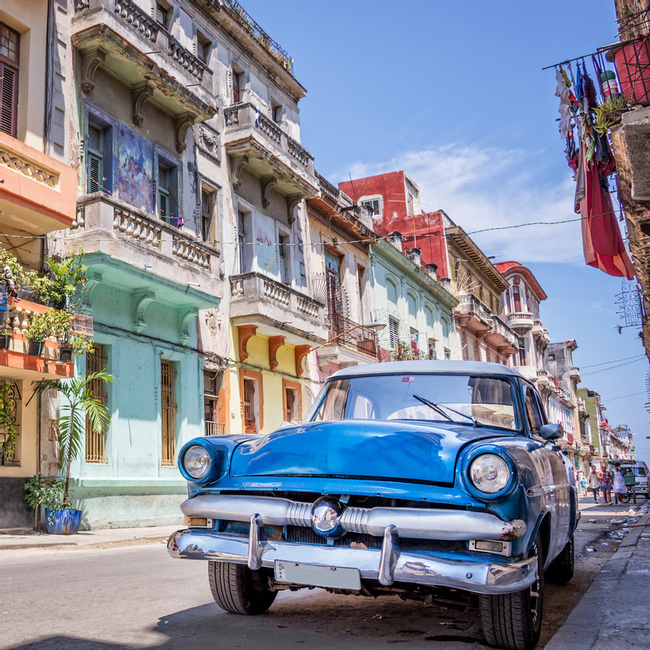
77 percent of Cuba’s population lives in cities. Spanish colonial architecture and classic cars characterize urban Cuba. Visitors come to these destinations to experience world-famous dance halls and nightclubs.
Exotic Cuban Beaches
Cuba captivates the popular imagination with its beaches. White sand and clear, turquoise water make Cuban beaches some of the top destinations for visitors who want to spend their vacation at a resort. You can find beaches near shipwrecks and natural coral reefs. Gentle surf makes it easy to swim or snorkel.
Topographical Diversity
To see more of Cuban wilderness, visit the mountains and valleys of Sierra Maestra on the easternmost tip of Cuba. This is home to Pico Turquino National Park, which is named for Pico Turquino Mountain. At 6,476 feet (1,974 m), Pico Turquino is the tallest mountain in Cuba. Guanahacabibes Peninsula National Park is on the west coast, and boasts the beaches of María La Gorda and underwater caves that attract scuba divers. Also in the west you can visit Viñales National Park, which is famous for its magotes – these twisted limestone formations make the landscape as surreal as it is breathtaking.
Geography and Micro Climates of Cuba
Cuba is the largest island in the Caribbean, with an area of 42,401 square miles (109,820 sq km) – just slightly smaller than the state of Pennsylvania. It is comprised of a mainland as well as many thousands of islands clustered around the coast, the largest of which is Isla de la Juventud.
22 percent of Cuba’s territory is covered by national parks and wildlife preserves. You can also visit preserves on Cuba’s extensive coastline, which serve to protect the intact coral reefs near the shore.
The dry season lasts from December to April, and is the high season for visitors. Cuba’s rainy season lasts from May to October, but plenty of visitors still come during the summer months of July and August. Rain usually comes in bursts and doesn’t typically last all day. The eastern coast is prone to hurricanes from August to November. No matter the season, the temperature is almost always comfortable in Cuba, and is usually between 77 °F (25.2°C) and 81°F (27.2°C).
Historical Snapshot
The story of Cuba continues to be written, and the next chapter is leaving the entire world optimistic. Following the death of longtime leader and revolutionary Fidel Castro, former President Raúl Castro worked with the United States (under the Obama administration) to begin re-establishing diplomatic relations and reuniting families. Raúl has since stepped down, and the close of the Castro Family dynasty has given rise to President Miguel Díaz-Canel. Slowly but surely, the nation continues to make strides to shape its future, and share its beauty and unbreakable spirit with the rest of the world.
Society
Cuba has a population of a little over 11 million. The national socialist wage of around 17 USD per month makes it difficult for many Cubans to afford basic necessities. Many Cubans rely on the black market to supply the things they need and make extra cash.
Many of the social hierarchies imposed on Cuba by the Spanish still exist today. There is a large population of people of any descent called criollos, the result of the Spanish colonizers taking indigenous Cuban brides in the 16th and 17th century. The slave trade brought Africans from Nigeria and Benin, which created a strong Afro-Cuban culture that has shaped modern Cuba. Santería, son music, and modern art have all drawn from the cultures brought to Cuba from Africa. Today you can see thriving Afro-Cuban culture in the city of Santiago de Cuba.
Economy
The economy in Cuba relies heavily on tourism. For decades Cuba dedicated all of its agricultural resources to growing sugar, and served as the main supplier of sugar to countries in the Soviet Bloc. When Soviet Union crumbled in the 1990s, Cuba scrambled to make ends of meet. Tourism has helped the country recover somewhat, but Cubans still deal with shortages of supplies and rations on a regular basis.
With the influx of more visitors from the U.S., there is hope that the economy will continue to improve. Anyone who has ever wished for a white sand beach and clear blue water should find a reason to visit Cuba. Here you’ll encounter untrammeled beaches, and a culture that has developed in relative isolation.
Real Voices, Real Benefits
We believe travel is more than ticking destinations off a list – it's about discovering new places deeply, feeling connected wherever you go, and knowing you have a trusted team of local experts behind you every step of the way.