We work in the kind of places you daydream about—countries with real range, from cities and coasts to jungles, mountains, and small towns. Our in-country insiders handle the planning, booking, and in-trip problem solving, so you can drop in, enjoy the highlights, and come home with stories that keep you inspired to keep exploring our amazing planet.
Trip Types
We can design transformative travel experiences for any group-type that match your unique style and your ideas for activities and dream locations. Let's build your adventure.
Things To Do
We can design transformative travel experiences for any group-type that match your unique style and your ideas for activities and dream locations. Let's build your adventure.
Panama’s 76 protected areas cover close to two million hectares (5 million acres) of the country, some 25 percent of Panama’s total landmass. Many of these areas are part of the national park system, which includes 13 national and marine parks, and one international park. Panama’s first national park, Parque Nacional Altos de Campana, was created in 1966 and all other parks have been established since then.
Destinations
Panama highlights: National Parks of Panama
Not sure where you want to go yet? Get inspired and browse the best places to visit in Panama
Gulf of Chiriqui National Marine Park
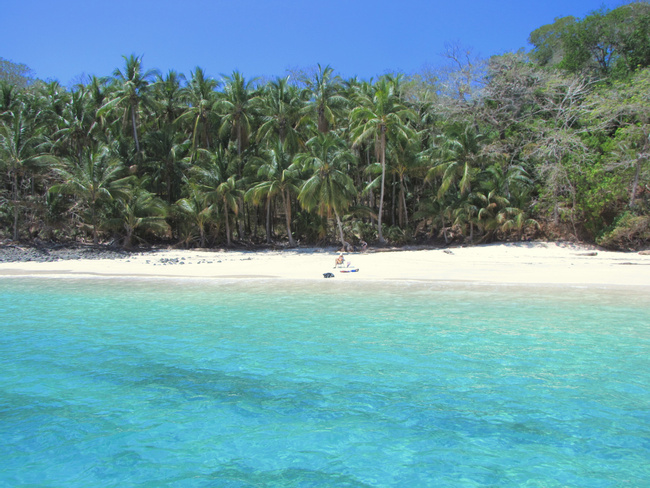
The Gulf of Chiriquí National Marine Park spreads across 36,423-acres (14,740-hectares) off the Pacific coast of Panama. Founded in 1994, this marine park protects islands, reefs, mangroves, and all kinds of marine and terrestrial wildlife. It’s a great place to snorkel, scuba dive, fish, or simply lounge along a secluded island beach.
Panama’s Coiba National Park is incredible and exotic. Set along the Pacific coast near the Gulf of Chiriquí, this massive park protects the country’s largest island and some of the most biologically rich waters in Central America. For this reason alone, it’s a favorite among scuba divers and snorkelers.
Set just outside the town of Boquete in Panama’s western highlands, the Barú Volcano National Park (Parque Nacional Volcán Barú) is large and impressive. The park contains Panama’s only volcano, highest peak, and several scenic (albeit rugged) hiking trails. Birders are especially fond of the park, as it offers the chance to spot one of Central America’s most elusive birds, the resplendent quetzal.
Altos de Campana is Panama’s oldest national park. Established in 1966, this 4,817-acre (1,950-ha) park is a good place to spot orange-bellied trogons and other avian species. It’s a short drive from Panama City and an easy stop-off point along the Interamerican Highway.
The Cañas Island Wildlife Refuge is Panama’s most important nesting site for sea turtles along the Pacific coast. The island is visited by five species of sea turtles, including the olive ridley, Pacififc green, loggerhead, leatherback, and hawksbill. The refuge is set to the south of Pedasi on the Azuero Peninsula and is somewhat difficult to reach.
Isla Iguana is a small island off the eastern coast of the Azuero Peninsula. Declared a wildlife sanctuary in 1981, Isla Iguana protects marine birds, tropical fish, and a large coral reef. It’s a short boat ride from Pedasi and is a pleasant place to visit for the day.
Created in 1984, this 32,557-hectare (80,450-acre) national park contains some of the last remaining primary forest on the Azuero Peninsula. Until recently, the park was extremely difficult to reach and only explored by intrepid travelers. However, new improvements to the road system along the eastern coast of the Azuero have made this fantastic park much more accessible.
The 58,185-acre (19,500-hectare) Fortuna Forest Reserve is one of the most extensive mid-elevation cloud forests in Central America. Set within Panama’s western highlands, the reserve protects over 1,000 plant species and has some of the best bird watching in the country.
The massive, 1,005,719-acre (407,00-hectare) La Amistad International Park lies along the Talamanca range in northwestern Panama. The park, which is home to an important array terrestrial species, spreads into Costa Rica and is jointly protected by both countries. La Amistad was established in 1988 and declared a UNESCO World Heritage site in 1990.
Known to most Panamanians simply as El Copé, The Omar Torrijos National Park extends along both the Pacific and Caribbean slopes of the Continental Divide in central Panama. The park is somewhat difficult to reach, but has well preserved forests and wildlife, partially due to its remote location.
Pirre Station is an ANAM ranger station in the Darién National Park and one of the few places that visitors can access the Darién. Pirre Station has lush primary forests and some of Panama’s best birding. Its remote location, however, means that it’s tough to get here and is only for adventurous travelers. The lodging is extremely basic.
Established in 1923, the Barro Colorado Nature Monument (BCNM) is located in the middle of the Panama Canal and is the largest forested area in the Panama Canal waterway. Barro Colorado Island (BCI), together with five adjoining mainland peninsulas, forms the 5,400-hectare nature monument. Administered by the Smithsonian since 1946, Barro Colorado is home to one of the most famous biological research facilities in the world. Not surprisingly, the island’s flora and fauna have been more thoroughly studied then any other neo-tropical area of comparable size on Earth.
The Punta Patiño Nature Reserve is the largest private reserve in Panama. Set along the Darién’s Pacific coast, Punta Patiño spreads across 74,132 acres (30,000 hectares) and includes huge swaths of primary and secondary forest. It has well-developed trails, great biodiversity, and sees very few visitors.
The 776-hecatre (1,917-acre) Cenegón del Mangle Wildlife Refuge is located on the Azuero Peninsula near Chitré. The refuge helps protect an elaborate mangrove system, as well as critters like herons and caiman.
Established in 1985, the Chagres National Park covers some 319,000 acres (129,000 ha) of land near the Panama Canal. The park protects Alajuela Lake and the Chagres River basin, which is an important source of water for Panama City and Colón.
The Metropolitan Natural Park is a 573-acre (232-ha) park set squarely in the heart of Panama City. Despite its urban location, this park has good hiking trails and an impressive amount of wildlife.
The Darién National Park is Panama’s largest and wildest park. Set upon the eastern edge of the isthmus along the border with Colombia, this park protects Panama’s most rugged outdoor areas. The forest is virgin and home to an incredible array of plant and animal species. The two best places to visit the park are Santa Cruz de Cana and Pirre Station. It should be noted, however, that this park is extremely remote and sometimes deemed dangerous (due to guerillas) by the Panamanian government.
The Sarigua National Park is a sad example of deforestation in the tropics. This 20,000-acre (8,000-ha) national park is set 6 miles (10 km) northwest of Chitré. It was once the site of an ancient civilization, but these days is little more than a desert wasteland.
The Soberanía National Park is one of Panama’s finest birding sites. Its 55,000 acres (22,000 ha) extend along the shores of the Panama Canal and protect a bounty of important species. The park is a short drive from Panama City and as such is the country’s most accessible tropical forest.
Santa Fe National Park is located in Panama’s Veraguas mountain range. It encompasses the northern stretch of the Santa María River. Hiking on trails through this untrammeled rainforest will offer an interesting chance to identity plant and birdlife.
The Gulf of Chiriquí National Marine Park spreads across 36,423-acres (14,740-hectares) off the Pacific coast of Panama. Founded in 1994, this marine park protects islands, reefs, mangroves, and all kinds of marine and terrestrial wildlife. It’s a great place to snorkel, scuba dive, fish, or simply lounge along a secluded island beach.
Coiba National Park
Barú Volcano National Park
Altos de Campana National Park
Canas Island Wildlife Refuge
Iguana Island Wildlife Refuge
Cerro Hoya National Park
Fortuna Forest Reserve
La Amistad International Park
Omar Torrijos National Park
Pirre Station
Barro Colorado
Punta Patino Nature Reserve
Cenegón del Mangle Wildlife Refuge
Chagres National Park
Metropolitan Natural Park
Darien National Park
Sarigua National Park
Soberanía National Park
Santa Fe National Park
Anywhere Costa Rica
Insider-led Costa Rica Design & Concierge
Your insider team designs the trip around what you care about, then supports you in-country with private logistics, vetted partners, and concierge help when plans change.
Insider-only experiences and exclusive local partners.
24/7 in-country support by phone, text, and WhatsApp.
Anywhere Costa Rica
Insider-led Costa Rica Design & Concierge
Your insider team designs the trip around what you care about, then supports you in-country with private logistics, vetted partners, and concierge help when plans change.
Insider-only experiences and exclusive local partners.
24/7 in-country support by phone, text, and WhatsApp.
Built for travelers who want a premium experience—not budget deal shopping.
2,600+ 5-star reviews
See if Anywhere is a fit
Standard
The best highlights, privately supported. Private transfers, insider planning, and in-country help. Limited concierge support.
Premium
Upgraded stays + more private experiences. Priority logistics, top guides, and better tables and timing. Upgraded concierge access.
Exclusive
The highest-touch service. Top-tier properties, maximum flexibility, and 24/7 concierge-level handling end-to-end.
Belong Anywhere
Real Voices, Real Benefits
We believe travel is more than ticking destinations off a list – it's about discovering new places deeply, feeling connected wherever you go, and knowing you have a trusted team of local experts behind you every step of the way.